



Products Description
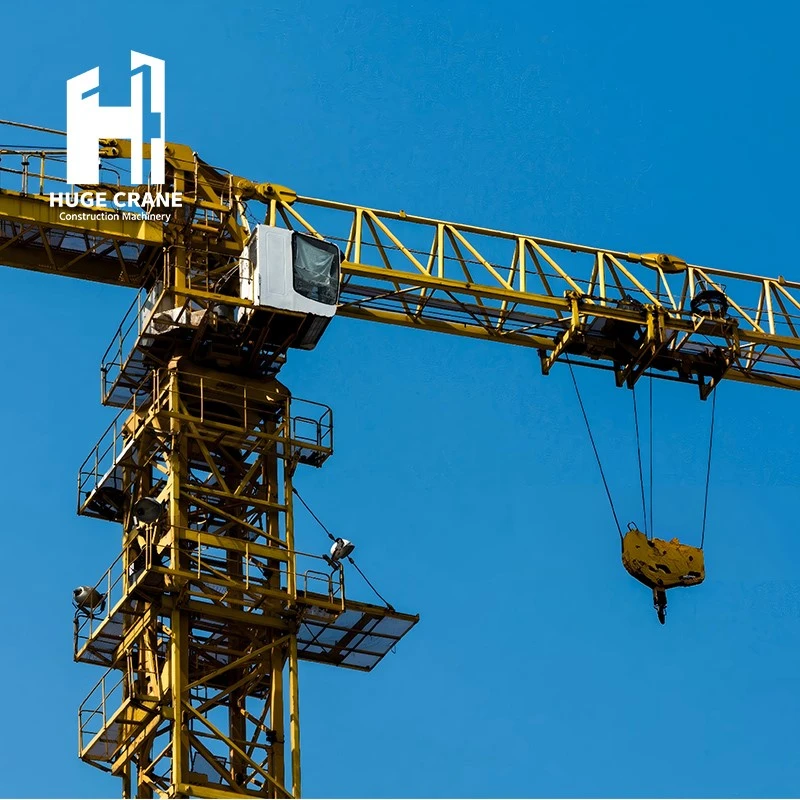
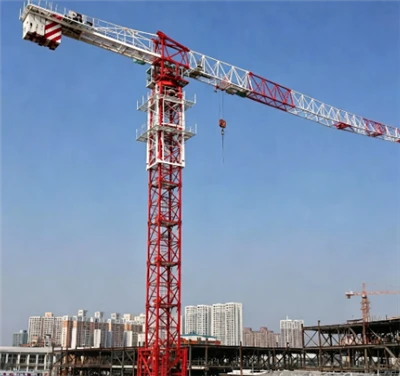
This rail-traveling flat-top tower crane is widely used on construction sites. Its flat-top design, which eliminates the traditional tower head, accelerates assembly and disassembly and simplifies transport between sites. Mounted on a traveling chassis, the crane moves horizontally along rails, reducing the need for frequent dismantling to cover larger work areas.
Constructed from sturdy steel, the main frame ensures stable lifting performance. Key safety features include load moment limiters and wind speed detectors to help prevent accidents. Different jib lengths are available to accommodate various building plans.
This crane delivers reliable performance for high-rise projects and infrastructure work, offering construction firms a practical and cost-effective lifting solution.
Applicable Industries

1.High-rise residential constructio.
2.commercial building projects.
3.municipal infrastructure.
4.bridge engineering.
5.industrial factory.
6.construction and large-scale housing development.
Construction Cases
Case 1: Helicopter-Assisted Erection in the Alps (Montenvers, France)
We had a job at 1,913 meters up on the Mer de Glace glacier near Mont Blanc. New cable car station and a climate change education center. Road access was nonexistent, so we planned to fly everything in by helicopter. The problem: the original 250-tonne class crane was too heavy-the helicopter maxed out at 3,800 kg depending on conditions .
We ended up going with a Liebherr 150 EC-B flat-top. The heaviest single component, the counter-jib, was right at 3,600 kg, which made it feasible. The architects had to go back and redesign some concrete elements to lighter sections so we stayed within the crane's 8-tonne capacity . The helicopter made 30 sorties from a staging area about 3.5 km away. Four assembly guys and six flight assistants had it up in about eight hours-45-meter jib, 42-meter hook height. They actually won a French crane assembly award for this one, mainly because of the logistical headache involved.
Case 2: Tight Urban Site in Oldenburg, Germany
Mixed-use residential and commercial building in the Oldenburg city center, over 120 apartments plus retail. The site was smack in a pedestrian zone, narrow access roads, trucks could barely turn around .
We used two flat-tops on this one: a 172 EC-B 8 and a 125 EC-B 6. Honestly, we didn't pick them for lifting performance-the main factor was transport. The jib sections on the EC-B stack flat, so regular trucks could deliver everything. No need for long-load trailers. If we had gone with hammerhead cranes, the site manager figured we'd need at least 20 more truckloads, and they just wouldn't fit through the streets. Both cranes were on foundation anchors and covered the entire site from April 2022 to January 2023 without repositioning .
Case 3: Zoo Dome with Geothermal Constraints (Münster, Germany)
Tropical zoo enclosure with a 4,000 sqm foil dome, max height 16 meters. The steel frame had some long, heavy members-the heaviest was 4.2 tonnes, but nearly 49 meters long, and the placement tolerance was tight .
The headache here was the geothermal ground probes. They were all over the site, so standard concrete crane foundations were out. We used a cruciform base instead, which avoided the probes. The crane was a 172 EC-B 8 with Liebherr's Micromove fine-positioning system. The operator said that made a big difference for aligning the long steel sections-he could ease them into place without forcing or banging them around . The factory support engineer showed up on site the same day when we needed adjustments, which was quicker than anyone expected.
After-Sales Service
What the Service Package Typically Includes
Most major manufacturers and dealers offer a complete lifecycle support package covering all stages from planning to dismantling.
Planning Support: Specialists assist with cost-effective crane use plans and transport logistics. Some handle coordination with authorities for traffic permits and road closures during crane moves.
Setup and Teardown: Qualified assembly engineers manage efficient transport, assembly, and disassembly. This is especially valuable for traveling flat-top cranes that frequently move between jobs or across sites.
Maintenance and Spare Parts:
A global service network minimizes downtime with factory-trained technicians skilled in assembly, troubleshooting, and repairs.
Access to original spare parts ensures reliability and extends crane lifespan. Parts for undercarriage and travel mechanisms are particularly important for traveling cranes.
Training and On-Site Support:
Training includes in-person sessions, e-learning, and video tutorials for operators and maintenance teams.
On-site services offer safety training, fault identification (sometimes via remote monitoring), damage assessment, and minor repairs-critical for travel mechanism issues during projects.
FAQS
A1:What are the weight limits?
Q2:This depends entirely on the specific crane and its load chart. Always check the manufacturer's specs for the exact lifting capacity at any given radius .
A1:What's the wind limit for safe operation?
Q2:Generally, operations get suspended when wind speeds exceed 20-30 mph. The crane manual should have the exact figures, and common sense says to shut down when things get gusty .
A3:What are the main downsides of a flat-top?
Q3:A couple of things. The jib and counter-jib are heavier-about 5% to 15% more than a standard hammerhead crane. That can be a problem if it's an older unit that hasn't been well maintained. Also, the jib sections can be too tall for standard shipping, sometimes needing to be broken down to meet transport height limits .
A4:How do I choose the right model?
Q4:It comes down to three things: max lifting capacity, the height you need (free-standing or traveling), and tip load at full jib length. The supplier usually works from those specs to recommend a model .
A5:What does the model code mean?
Q5:Using TC7135 as an example: "TC" stands for Tower Crane, "71" is the jib length (71 meters), and "35" means a 3.5-tonne tip load .
A6:Can you add extra equipment?
Q6:Usually yes. Lights on the jib, monitors, remote controls, and anemometers are available at extra cost. That said, most operators prefer working from the cabin for a better view, so remote control isn't always recommended .
Hot Tags: traveling flat-top tower crane, China traveling flat-top tower crane manufacturers, suppliers, factory, 7 5 Ton Crane, Construction Tower Crane 6ton, Flat Top Tower Crane, Flat Tower Cranes, tower cranes