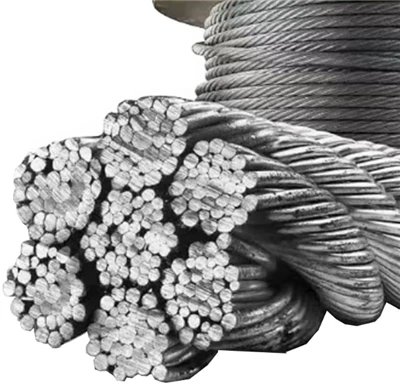


Hey there! I'm a supplier of Tower Crane Wire Ropes, and I've been in this business for quite a while. One question that often pops up is about the relationship between tower crane height and wire rope length. It's a crucial topic, especially for those involved in construction projects, as getting it right can make a big difference in the efficiency and safety of the operation.
Let's start by understanding the basics. A tower crane is a type of crane that's commonly used in construction sites to lift heavy materials. The height of a tower crane is a key factor in determining how high it can lift loads. And the wire rope is what does the actual lifting work. So, naturally, there's a close connection between the two.
The height of a tower crane is mainly determined by its mast section. You can check out more about Tower Crane Mast Section on this link. The mast is the vertical part of the crane that provides the height. As the mast gets taller, the crane can reach higher. But when it comes to the wire rope, it needs to be long enough to reach the maximum height that the crane can lift to, plus some extra length for the lifting mechanism and any slack that might be needed during operation.
For example, if a tower crane has a height of 50 meters, the wire rope needs to be long enough to reach that height. But it's not as simple as just having a 50 - meter wire rope. There are other factors to consider. The wire rope has to pass through the hoist mechanism, which is usually located at the top of the crane. So, there's some additional length required for the rope to loop through the hoist and connect to the load. Also, during the lifting process, there needs to be some slack in the rope to allow for smooth operation and to prevent the rope from getting too tight and breaking.
Let's take a look at the math behind it. The length of the wire rope (L) can be estimated using a simple formula. If the height of the tower crane is H, and we assume that the additional length for the hoist mechanism and slack is approximately 10 - 20% of the height, then the formula would be something like L = H + (0.1 - 0.2)H. So, for a 50 - meter tower crane, the wire rope length could be around 55 - 60 meters.
However, this is just a rough estimate. In real - world scenarios, the actual length of the wire rope depends on the specific design of the tower crane. Different cranes have different hoist mechanisms, and the way the wire rope is routed through the crane can vary. Some cranes might have a more complex system where the wire rope passes through multiple pulleys, which would increase the required length.
Another important factor is the type of work the tower crane is going to be used for. If it's a project where the crane needs to lift loads to the very top of the building being constructed, then the wire rope needs to be long enough to reach that height. But if the crane is mainly used for lifting materials to lower levels, then a shorter wire rope might be sufficient.
Now, let's talk about safety. The length of the wire rope is directly related to the safety of the tower crane operation. If the wire rope is too short, it won't be able to reach the desired height, which can lead to the crane not being able to perform its job properly. On the other hand, if the wire rope is too long, it can get tangled or create a safety hazard. That's why it's so important to choose the right length of wire rope for the specific height of the tower crane.
As a Tower Crane Wire Rope supplier, I've seen many cases where the wrong wire rope length was used, and it caused problems. Sometimes, the rope would break because it was under too much stress, or it would get stuck in the hoist mechanism. These issues can not only delay the construction project but also pose a serious risk to the workers on the site.
In addition to the height, there are other factors that can affect the choice of wire rope length. One of these is the wind. A Tower Crane Anemometer is used to measure the wind speed. Strong winds can cause the load to sway, and a longer wire rope can increase the amplitude of the sway. This can be dangerous, especially when lifting heavy loads. So, in windy conditions, it might be necessary to use a shorter wire rope or take other precautions to ensure the stability of the load.
The quality of the wire rope also plays a role. A high - quality wire rope is more durable and can withstand the stress of lifting heavy loads at greater heights. When choosing a wire rope, it's important to consider factors such as the material, the construction of the rope, and the breaking strength. As a supplier, I always recommend using wire ropes that meet the industry standards and are suitable for the specific requirements of the tower crane.
If you're in the market for Tower Crane Wire Ropes, it's essential to have a clear understanding of the relationship between the tower crane height and the wire rope length. You need to know the height of your tower crane, the type of work it will be doing, and the environmental conditions at the construction site. This will help you choose the right wire rope for your needs.
As a supplier, I'm here to help you make the right choice. Whether you need a wire rope for a small - scale construction project or a large - scale high - rise building, I can provide you with the best quality wire ropes at competitive prices. If you have any questions or need more information about Tower Crane Wire Ropes, feel free to get in touch with me. We can have a detailed discussion about your requirements and find the perfect solution for your project.
In conclusion, the relationship between tower crane height and wire rope length is a complex but important one. By understanding the factors involved and making the right choices, you can ensure the safe and efficient operation of your tower crane. Don't hesitate to reach out if you're looking to purchase Tower Crane Wire Ropes. I'm here to assist you every step of the way.