



Products Description
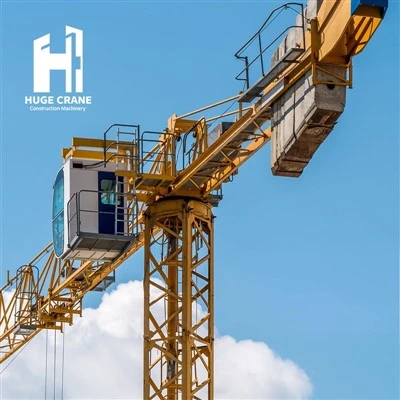
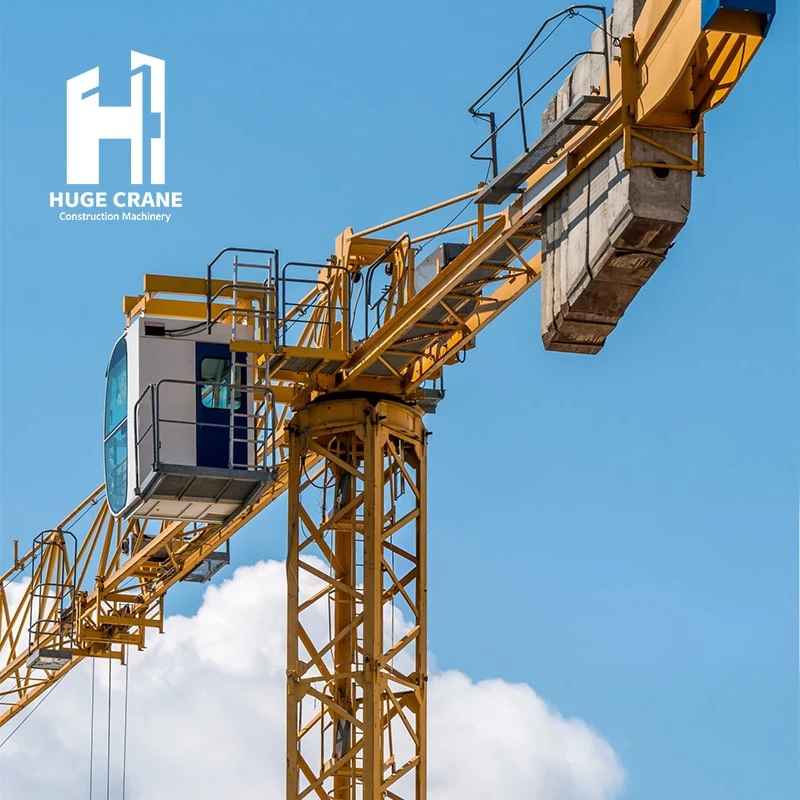
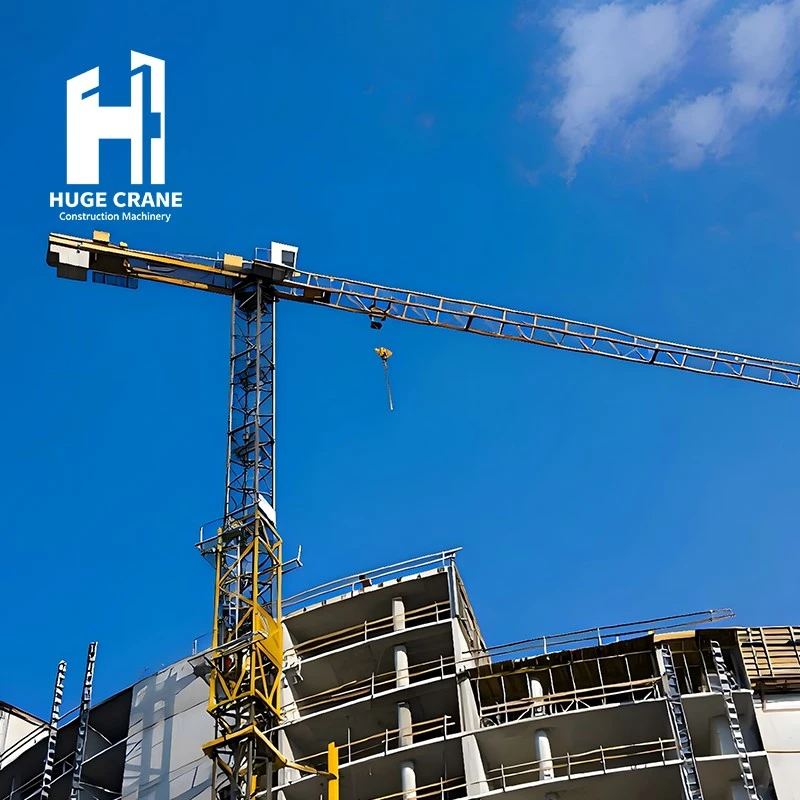
The Fixed Mast Flat-Top Tower Crane is a modern tower crane design that eliminates the conventional tower top (cathead) and tie‑rod structure. Its defining feature is a jib (boom) that is rigidly connected directly to the top of the mast, creating a clean "flat‑top" configuration. As a fixed‑mast type, the tower is permanently anchored to a concrete foundation or embedded anchor bolts on the building's load‑bearing slab, making it ideal for long‑term, stable construction projects.
Applicable Industries
1.Building & General Construction
2.Heavy Civil & Infrastructure
3.Energy & Industrial Facilities
4.Specialized & Logistical Sectors
5.Precast Concrete & Prefabricated Construction
6.Power Generation Facilities
Construction Cases
Fujian coast, nuclear plant
Salt spray eats steel. They had an XGT7022-12S there, built with SA3-grade anti-corrosion – about as heavy as you can spec. Six Hualong One reactors, each a million kW, total investment north of 100 billion RMB. Multiple cranes working within boom-swing distance of each other. Flat-top kept height low enough that jibs didn't threaten each other. Ran every shift without a major stop.
Bangkok, 340 metres
MahaNakhon Tower, 77 floors. They put a Comansa 21LC290 on it – 18-ton hook, 40-metre jib. Mounted at 60.7 metres, then climbed it up through the core all the way to the top. Hoist motor 110 kW, line speed 228 m/min, drum held 1,280 metres of cable. Sixteen-hour days. Core done in 20 months. Contractor said the crane was never the reason they fell behind.
Budapest, five machines on one site
Elite Park, 464 apartments, city centre. Five Liebherr EC-Bs – 150s, 220s, 250s – jibs from 40 to 55 metres. Tower sections narrow enough to fit between existing walls. Micromove let them position to the millimetre – formwork, rebar, window units, all placed without rework. Floor cycle: two weeks. Five cranes, no collisions.
Hamburg, tight as it gets
Boa Vista office, seven storeys, central Hamburg. Two Terex units – CTT 91-5 and CTT 161A-8. Thirteen truckloads of parts through streets that weren't built for trucks. Assembly space so small you couldn't lay a jib section flat. CTT 161 did 8 tons at 40 metres, still had 4.15 tons at the tip. VFDs fitted because the local grid couldn't handle voltage swings – that was in the spec. Take-down: CTT 91 came down using the CTT 161, then a mobile crane had the CTT 161 down in six hours.
After-Sales Service
After-Sales – What You Actually Get
Let's be honest – every manufacturer promises "24/7 support" and "comprehensive service." What matters is what happens when something breaks on a Friday afternoon and you've got a pour scheduled for Saturday morning.
Response Time
Most of the bigger players – Liebherr, Terex, XCMG, Zoomlion – have regional depots or authorized service centers in major markets. If you're within a couple hundred kilometres of one, they can usually get a tech to site within 4 to 8 hours for a critical breakdown. For more remote sites, they'll do a video call first – walk your onsite mechanic through diagnosis, send parts overnight if needed. That's the standard now. Nobody flies a tech out for a blown fuse anymore.
Spare Parts Availability
This is where a lot of brands drop the ball. The good ones maintain local stock – common wear items like brake pads, limit switches, wire ropes, gearbox seals, and control boards. If they don't have it locally, they'll air-freight from the main warehouse. Expect 2 to 5 days for non-stock parts, depending on customs. Some Chinese manufacturers have been building up overseas parts hubs in Southeast Asia, the Middle East, and Africa – that's cut lead times significantly in the last few years.
Warranty Coverage
Typical warranty runs 12 to 24 months or 2,000 operating hours – whichever comes first. Structural components – mast sections, jib, slewing ring – usually get longer, up to 3 to 5 years against manufacturing defects. But read the fine print: wear parts aren't covered, and they'll void it if you've been overloading or using non-specified lubricants. That's standard everywhere.
Training & Documentation
You get an operations manual and a parts catalog – that's mandatory. Beyond that, some suppliers throw in a couple of days of onsite training for your operators and maintenance crew. Liebherr and Comansa are known for good training programs. The Chinese brands have been catching up – some now offer simulator-based training or send a factory rep to stay on site for the first two weeks of commissioning.
FAQS
Q1: How high can this crane go free-standing (without building attachment)?
A1:Most flat-top cranes offer 40 to 80 metres of free-standing height depending on the model and mast section size. Taller free-standing heights require bigger mast sections. For heights beyond that, wall ties or frame attachments are needed every 20 to 30 metres. Some heavy models, like the SFT600, can reach up to 78 metres free-standing, but this is uncommon. Always check the load chart for your specific crane configuration.
Q2: Can I convert my hammerhead crane into a flat-top?
A2:No. Hammerhead and flat-top cranes have fundamentally different structural designs-including mast top connections, jib attachments, and counter-jib layouts. Conversion would mean replacing half the crane. If you need a flat-top, it's best to purchase one designed as such.
Q3: How long does assembly take?
A3:For an 8 to 12-ton flat-top crane, expect 2 to 3 days with a skilled crew and mobile crane. Larger units (20 tons and above) can take 5 to 7 days, especially on tight sites with limited space for component layout. Flat-tops save about a day compared to hammerheads because they don't require tower caps or tie rods. Poor site access can add time.
Q4: Are flat-tops more expensive than hammerhead cranes?
A4:Yes, generally 10 to 20% more for similar capacity and jib length. The premium pays for advanced structural engineering that provides a lower profile and stiffer jib. However, savings in assembly time, site logistics, and reduced crane interference often offset this cost. Evaluate based on your project specifics.
Q5: What's the wind limit for operation?
A5:Most flat-tops have a maximum operating wind speed of 20 m/s (72 km/h) at jib height. Above this, operations stop and the hook is parked, allowing the crane to weathervane. For windy sites, models with enhanced slewing brakes or wind-rated components are advisable. The flat-top's lower profile helps reduce wind loads compared to hammerheads.
Hot Tags: fixed mast flat-top tower crane, China fixed mast flat-top tower crane manufacturers, suppliers, factory, 7 5 Ton Crane, Construction Tower Crane 6ton, Flat Top Tower Crane, Flat Tower Cranes, tower cranes