




Products Description
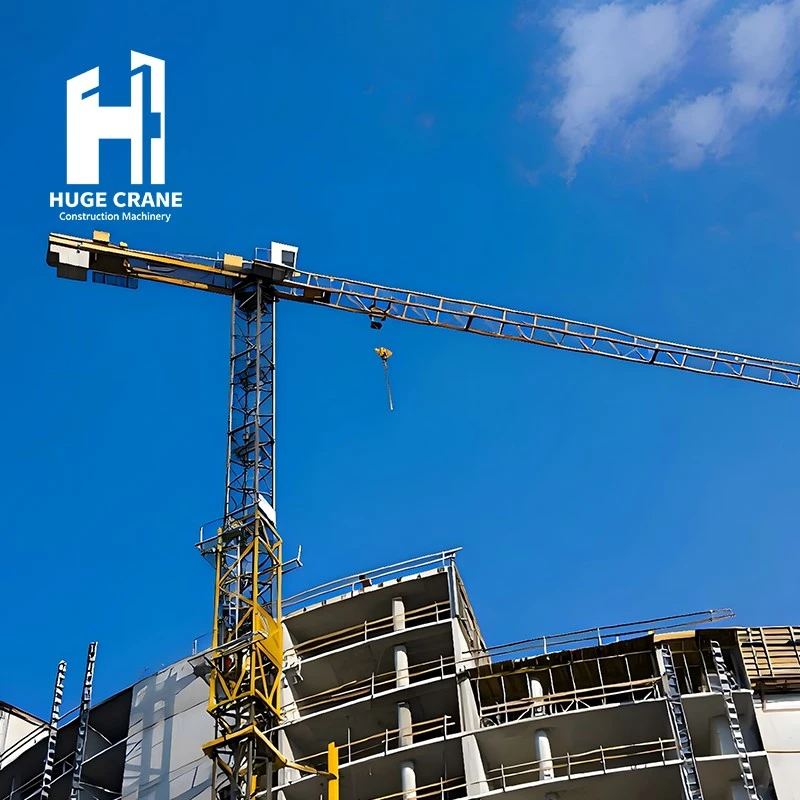
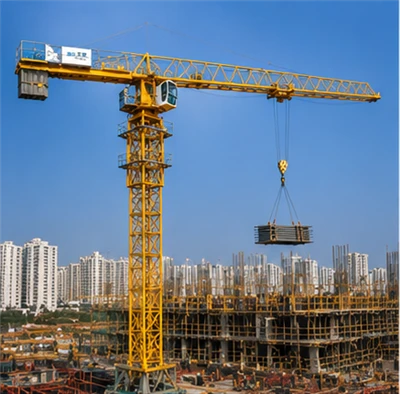
Our high mast flat-top tower crane is a field-proven lifting equipment tailored for high-rise building and large infrastructure construction. Removing the traditional tower head and complicated cable structure, it features simple assembly and dismantling, saving lots of on-site time and labor cost. Built with high-strength steel and processed with reliable anti-corrosion treatment, the machine runs stably under various harsh working conditions. It delivers smooth and precise lifting performance with full safety protection functions. Its compact flat-top design allows multiple cranes to operate simultaneously on crowded sites, bringing great flexibility and high working efficiency for actual construction projects.
Applicable Industries
🏗️ Major Infrastructure & Industrial Projects
Bridges, Tunnels & Nuclear Power: Models like the Huba T80230-100 are used by government construction companies for nuclear power stations and bridge projects. Liebherr flat-top cranes were also employed on Germany's largest underground U5 subway line.
Energy Infrastructure: Liebherr cranes were instrumental in building the world's first artificial energy island (Princess Elisabeth Island), a major European energy initiative. They are also suited for waste-to-energy plants and data centers.
Large Industrial & Mining Projects: The Comansa 21LC1050 is designed for heavy-duty industrial and mining work, and buildings featuring heavy prefabricated and steel structures.
🏙️ High-Rise & Specialized Construction
High-Rise Residential & Commercial: Liebherr EC-B flat-tops are common in Miami for high-rise residential and commercial buildings, valued for operating efficiently in tight urban spaces without collisions.
Prefabricated & Modular Construction: Their high lifting capacity makes them ideal for handling heavy precast concrete and prefabricated components increasingly used in modern construction.
Construction Cases
1.Pinnacle SkyTower in Toronto, Canada, 110-story residential building, used a Terex CTT 472 flat-top tower crane, final hook height reached 348 meters.
2.Cipriani Residences in Miami, USA, 80 stories, used Liebherr EC-B series flat-top tower cranes, hook height reached 305 meters, multiple units deployed on site.
3.A mixed-use development project in Dublin, Ireland, 14 stories, used six Raimondi MRT573 flat-top tower cranes, primarily for precast concrete component lifting.
4.A waterfront residential project in Dubai used Raimondi MRT189 flat-top tower cranes.
5.Hamburg U5 subway line project in Germany, underground tunnel construction, used 18 Liebherr tower cranes, including EC-B series flat-top models.
6.Princess Elisabeth Energy Island project off the coast of Belgium, artificial offshore island construction, used Liebherr flat-top tower cranes, maximum lifting capacity 50 tons.
7.Trojena project in Saudi Arabia, NFT company purchased eight Potain MCT 2205 flat-top tower cranes.
8.A building renovation project in Cologne, Germany, installed a Liebherr 150 EC-B flat-top tower crane on top of an existing 60-meter-high building for vertical material transport during interior demolition and renovation.
After-Sales Service
1.Most major manufacturers have service teams spread across different regions. You can usually reach someone locally without going through a global headquarters.
2.When a problem comes up, the first step is often a phone call or email. Engineers can talk your crew through basic checks and decide if someone needs to come out.
3.If an on-site visit is required, technicians are sent over to handle assembly, disassembly, routine maintenance, or breakdowns. How fast they respond depends on what is written in the service agreement.
4.Spare parts are kept in regional warehouses so they do not take too long to arrive. Some brands, like Comansa, have larger depots in key markets like North America to cut down waiting time.
5.Training is part of the package too. Suppliers usually offer sessions for local operators and maintenance staff, covering daily inspections, safety rules, and common repair tasks. A few even let you send people to their factories for more hands-on practice.
FAQS
Q1: What kind of after-sales support do you offer?
A1: We provide phone and email support, on-site repairs, spare parts supply, and training for your crew. For special site conditions, we also offer extra engineering advice.
Q2: How fast can you respond if my crane stops working?
A2: You can contact us anytime. Our engineers will guide your team by phone to diagnose the issue. If it can't be fixed remotely, we'll send a technician as soon as possible per our service contract.
Q3: How long does it take to get spare parts?
A3: We stock common and critical parts in regional warehouses, including a large depot in North America. Delivery times vary by location, but we strive to deliver parts quickly.
Q4: Do you train our operators and mechanics?
A4: Yes. We offer training on daily checks, safe operation, lubrication, and basic troubleshooting. Advanced training sessions are also held periodically at our factories.
Q5: What if my job site has high winds or needs to lift very heavy loads?
A5: We assess your site conditions and provide advice on load limits, modifications, and lift planning to ensure safe crane operation in your environment.
Hot Tags: high mast flat-top tower crane, China high mast flat-top tower crane manufacturers, suppliers, factory, 7 5 Ton Crane, Construction Tower Crane 6ton, Flat Top Tower Crane, Flat Tower Cranes, tower cranes


