

Products Description
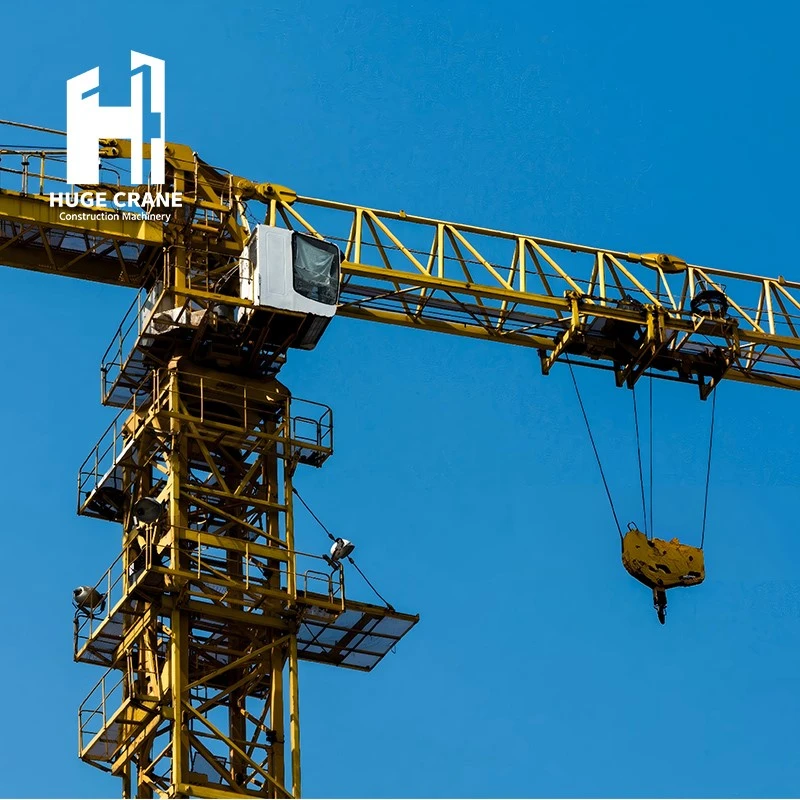
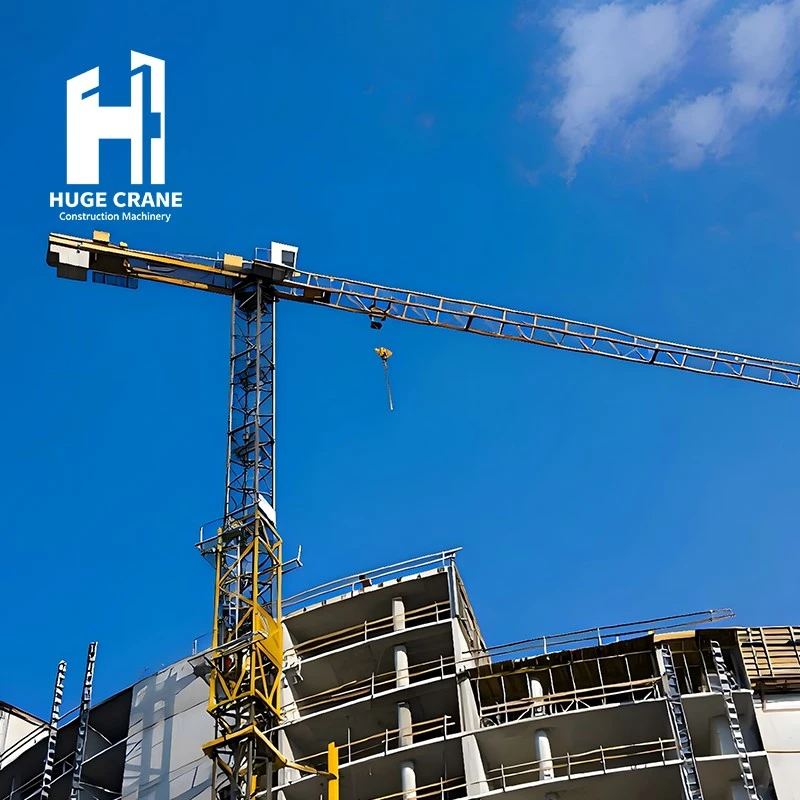
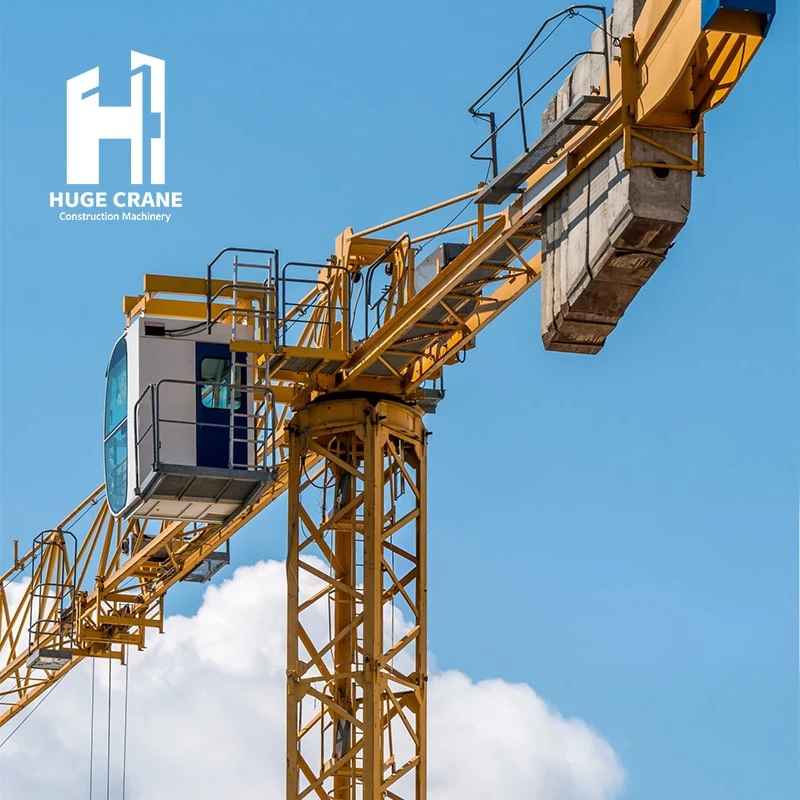
The Long Reach Flat-Top Tower Crane is a high-capacity lifting solution designed for large-scale, complex construction projects. Its standout feature is the removal of the traditional tower apex, which significantly lowers the overall structural height. This low-profile design allows safe and efficient operation in tight spaces like dense urban areas or sites near existing structures. With its exceptional jib reach, it's ideal for long-span, heavy-lift tasks such as bridge building, large stadiums, high-rise towers, and hydropower projects.
Applicable Industries
Construction
Primary market for these cranes due to their long jib and high capacity.
Ideal for handling heavy prefabricated parts (e.g., precast concrete) and large steel structures.
Optimal for high-performance lifts in densely built metropolitan areas where space is limited and precision is essential.
Infrastructure
Crucial for projects requiring significant reach and lifting power.
Used for erecting bridge girders, piers, and complex urban projects like subway construction.
Advantageous for working within confined footprints.
Industrial & Heavy Engineering
Most powerful models, like the Comansa 21LC1050 with up to 50 tonnes capacity, serve large industrial or mining projects.
Used as "sky-hooks" for tasks such as relining blast furnaces in steelworks.
Valuable for vertical industrial sites where crawler cranes are less practical.
Summary
Long reach flat-top tower cranes combine extended jib length with high load capacity, making them versatile and indispensable for a wide range of modern construction and industrial challenges-from urban high-rises to heavy industrial sites.
Construction Cases
1.The Safiyyah Museum in Madinah was a tight one. Real tight. City roads on one side, existing buildings on the other. No room to mess around. They used a Liebherr NC-B 12-70 with a 70-meter jib. The flat-top thing helped because the overall height was lower. Worked right next to everything without hitting anything. The operator had that Micromove control, which lets you move loads real slow and precise. No sudden jerks. They finished without blocking traffic or damaging anything nearby.
2.Germany's A45 bridge replacement. Rahmede Valley. 453 meters long. They had two Liebherr 340 EC-B 16 cranes out there. Both with 75-meter booms. One went up 61 meters, the other 65. These two handled the whole thing - the piers, the deck, everything. You know what happens with shorter booms? You keep moving the crane around. With 75 meters you don't. You just set up and go. That keeps the job moving.
3.Over in Hebei at the Xibaipo power plant they had an XCMG XGT3100-160S. Big machine. 160 tonnes. They were moving steel pieces that weighed over 100 tonnes each. And they had to put them in place with really tight tolerances. Up in the air. The crane has this micro-motion thing that works down to the millimeter. The guys on site said it was a game changer. They got the steel up about 30% faster than they'd expected.
4.The Taoyaomen Bridge in Zhejiang is the longest road-rail cable-stayed bridge in the world. They needed serious height for that one. Used two Potain MCT 385 cranes - 75-meter booms, 20 tonnes each. Ran them continuously. No major breakdowns the whole time. For a project that size, you can't have a crane go down halfway through a lift.
After-Sales Service
1. Installation support
We don't just drop the crane at your gate and leave. A field technician comes out and stays through the whole erection process. They'll supervise the assembly, check bolt tensions, make sure the tower sections are plumb, test the limit switches. And they won't pack up until the crane has done its first few production lifts and your operator is comfortable with the controls.
2. Spare parts availability
We keep regional warehouses stocked with the parts that wear out most often. Wire ropes, brake linings, limit switches, electrical relays, hydraulic seals. Standard stuff you can get within 48 hours. For anything not in the regional depot, we'll pull from the main warehouse and ship expedited. If it's an emergency and the crane is down, we'll fly parts out same day. That costs extra but we can arrange it.
3. Operator and supervisor training
This happens on site, not in some classroom. We run through the load charts, the wind speed limits, the moment limiter settings. The operator gets hands-on time with the actual machine they'll be using. The site supervisor gets the same so they know what to check during daily walkarounds. We leave behind a simple reference card with the critical numbers for that specific configuration.
4. Scheduled inspections
We recommend inspections every three months for active cranes. A certified tech comes out, runs through a checklist, checks for structural cracks, measures wear on the slewing ring, tests brake function, goes over electrical connections. They flag anything that looks marginal before it becomes a failure. Some contractors do this every six months instead. That's fine, but we'd suggest quarterly if the crane is working heavy cycles.
5. Remote monitoring
Newer models come with sensors that track load cycles, motor hours, hydraulic pressure, wind gusts. That data feeds back to our service center. If something drifts out of normal range we see it on our end and we'll call you before you even notice a problem. Not every customer wants this - there's a subscription fee for the monitoring service - but the ones who've tried it say it saves them from unexpected breakdowns.
FAQS
1. What's the difference between a flat-top tower crane and a regular hammerhead crane?
The main difference is up top. A hammerhead crane has that tall peak structure above the jib with tie rods coming down to support the boom. A flat-top doesn't have that. The jib connects directly to the top of the tower. That gives you a lower overall height, which matters when you're working near airports, under power lines, or in cities with height restrictions. It also makes assembly and disassembly simpler because you don't have to deal with that peak section. But the trade-off is the jib itself has to be stronger, which means more steel in the boom.
2. Why would I choose a long reach model over a standard one?
Reach is about coverage. If your job site is spread out over a wide area - like a bridge, a stadium, or a large industrial complex - a longer jib lets you cover more ground without moving the crane. That saves time. It also lets you work around obstacles. But there's a catch. The longer the jib, the lighter the tip load. At 80 meters out, you might only lift 3 or 4 tonnes, whereas at 30 meters you could lift 20 or 30 tonnes. So you need to look at your lift plan and see what kind of loads you'll be picking at what distance. There's no point paying for 80 meters if all your heavy picks are close in.
3. How long does it take to assemble one of these on site?
Depends on the crane size and the ground conditions. A typical medium-sized flat-top can go up in two to three days with a good crew and a mobile crane to help. Bigger units take longer - maybe four or five days. The flat-top design actually speeds things up because you don't have that top peak to install. You just bolt the tower sections together, attach the jib sections, rig the trolley and hook, and you're done. Weather plays a big role though. If it's windy, you're not doing any assembly work.
4. What kind of foundation do I need?
That depends on the crane's load capacity and the soil conditions on your site. The manufacturer provides foundation drawings based on the specific configuration. You'll need a concrete base with anchor bolts set in. The dimensions and reinforcement specs vary - a 10-tonne crane needs a much smaller base than a 50-tonne. We always recommend having a geotechnical survey done before you pour. If the soil is soft or unstable, you might need piles or a larger raft. We can advise on this but the final design needs to be signed off by a local engineer.
5. Can the jib length be adjusted after the crane is erected?
Yes. That's actually one of the advantages of the flat-top design. You can add or remove jib sections to change the working radius. But you need the right equipment to do it - usually a mobile crane to support the jib while you're making the change. It's not something you do casually. Most contractors decide on a jib length at the start and stick with it for the whole project. But if your project changes halfway through, it's possible to reconfigure.
Hot Tags: long reach flat-top tower crane, China long reach flat-top tower crane manufacturers, suppliers, factory, 7 5 Ton Crane, Construction Tower Crane 6ton, Flat Top Tower Crane, Flat Tower Cranes, tower cranes