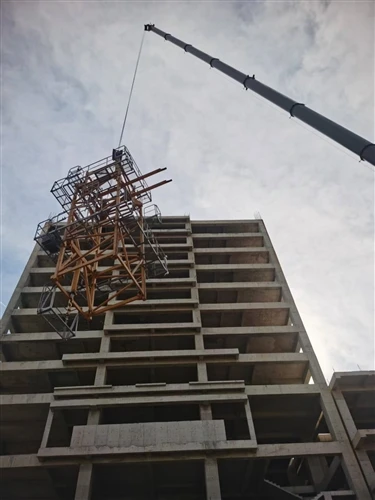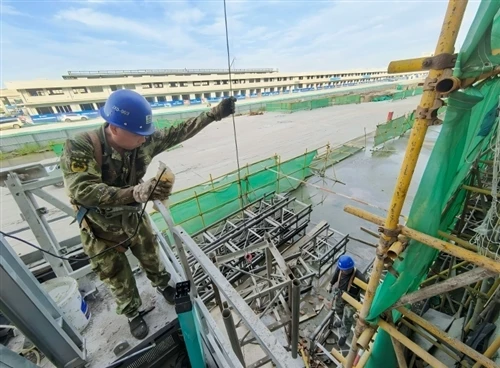


 I. Define independent work zones to prevent multiple work lines from competing for crane access
Divide the area covered by the crane jibs into independent work zones based on building units. Assign a specific construction crew to each zone, clearly define their hoisting boundaries, and prohibit encroachment on slewing paths outside their designated areas.
Arrange material storage yards in separate zones-keeping rebar yards, formwork yards, and concrete hopper parking areas distinct-so that hoisting routes do not overlap, thereby eliminating the risk of hoisting lines crossing in mid-air.
During cluster operations, stagger working heights and offset the operating sectors of adjacent tower cranes to prevent the need for cranes to halt operations to avoid collisions.
II. Stagger schedules to separate hoisting times for different materials
Prioritize hoisting rebar and formwork during the morning shift to ensure formwork installation and rebar tying are completed ahead of schedule; concentrate the transfer of reusable materials in the afternoon; and schedule only continuous concrete pouring for the night shift.
Strictly stagger peak hoisting times for heavy and light materials to prevent concrete hoppers and bundled rebar from competing for crane access simultaneously.
Create daily hoisting schedules in advance, specifying the materials to be lifted during each time slot. Require signalers to follow the master dispatcher's orders strictly to prevent ad-hoc requests from disrupting the workflow.
 III. Optimize hoisting processes to reduce cycle times
Bundle and prepare materials on the ground in advance so they are ready for immediate lifting, thereby minimizing the time tower cranes spend hovering while waiting for ground crews to prepare loads.
Standardize communication channels; assign a single signaling team to each tower crane to eliminate the confusion caused by conflicting commands from multiple sources. Optimize the hoisting reeving ratio: Use a 2-part line configuration for high-speed lifting of lightweight materials over long distances, and switch to a 4-part line configuration for heavy concrete loads; this balances load capacity with operating speed, thereby shortening the cycle time for each lift.
IV. Ensure equipment reliability to prevent process stoppages caused by breakdowns
Schedule a 20-minute inspection during shift handovers to check wire ropes, braking systems, and limit switches, preventing mid-shift breakdowns that could cause work stoppages.
Keep a stock of wear-prone parts on-site for rapid replacement of minor components, ensuring the daily schedule remains uninterrupted.
Conclusion
The key to minimizing downtime through multi-shift operations lies in dual control based on "zoning" and "staggered scheduling." Zoning eliminates path conflicts, while staggered scheduling separates material hoisting operations. Combined with standardized ground-level material preparation, these measures significantly reduce instances of tower cranes idling, maneuvering to avoid collisions, or queuing. This maximizes equipment efficiency and ensures the steady progress of continuous, 24-hour construction operations.
With Multiple Crews Working in Shifts, How Can The Lifting Sequence Be Reasonably Arranged To Minimize Waiting Time?
Related News