

Core fall-prevention devices during the climbing process
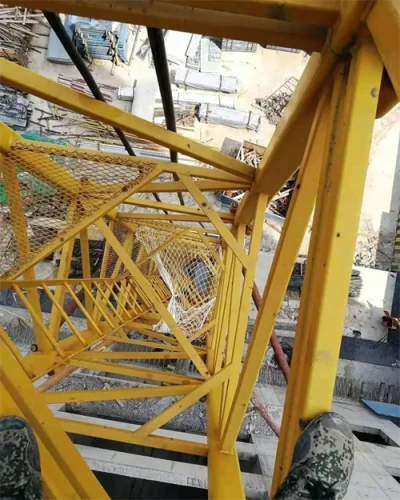
When the crane operator or installation personnel climb the tower body, they mainly rely on two types of core anti-fall devices to prevent accidental falls. The first is the speed difference fall-prevention device, which is equipped with a precise speed difference mechanism inside. During normal climbing, the steel wire rope freely extends and contracts with the human body; if an abnormal rapid descent is detected, the internal ratchet will quickly engage with the steel wire rope under the influence of inertia, achieving rapid braking and locking the falling personnel within a limited distance. The second is the self-locking safety rope, which is connected to the safety belt of the operator and the self-locking device on the straight climbing ladder of the crane. During normal climbing, the self-locking device's teeth are open; when the operator falls under the force of gravity, the self-locking device is automatically closed and clamps the steel wire rope, thereby preventing the person from continuing to fall.
Mechanical Fall Prevention and Dual Independent Systems
To address the high risks during the climbing process of tower cranes, modern advanced equipment has incorporated a dual independent fall prevention system. This system not only includes a personnel fall arrest device connecting the track and the safety harness of the personnel, but also a device fall arrest device. When the equipment itself experiences a sudden drop, the locking tongue of the device fall arrest device will be inserted into the slot of the guide rail for emergency locking, thereby ensuring the safety of both personnel and equipment. Additionally, the system is equipped with a manual descent protection system. In emergency situations where the equipment cannot operate normally, the operator can use the mechanical release device to ensure a smooth and safe descent of both personnel and equipment.
Physical redundancy protection for the tower body passage
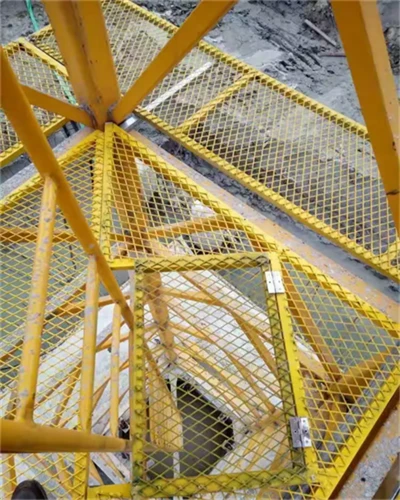
In addition to the personal fall arrest devices, the physical protection of the tower crane itself is also of great significance. According to relevant safety regulations, safety protective nets need to be set at certain heights on the standard sections of the tower crane to provide physical buffering and interception. At the same time, the climbing ladders of the tower crane are usually designed with an integrated structure. The spacing and width of the steps have strict standards, and a rest platform with an area of no less than 0.6 square meters must be set every 6 to 8 meters. The rest platform is equipped with guardrails and toe boards, which not only allow personnel to take a break but also effectively prevent accidental falls during the climbing process.