

Severe cooling down
Emphasizing both technological empowerment and humanistic care: New safety measures for tower crane drivers are introduced in multiple construction sites.
News report: As many regions enter the hot summer season, the tower crane driver's cab on the hundred-meter-high structure is facing a severe "heat" test. Recently, reporters visited large construction sites across various regions and found that in order to effectively ensure the occupational health and safety of tower crane drivers, major construction companies are comprehensively launching a set of comprehensive occupational protection plans covering cooling, noise reduction, and fatigue prevention. This has enabled a qualitative leap in the working environment at high altitudes.
Powerful cooling: From "high-altitude steambath" to "cloud air-conditioned room"
The tower crane driver's cab is small in space. Under the intense summer sun, the indoor temperature is prone to exceed 60℃, increasing the risk of drivers suffering from heatstroke and fainting. To address this issue, project departments in various regions have adopted a dual cooling strategy of "physical insulation + active cooling".
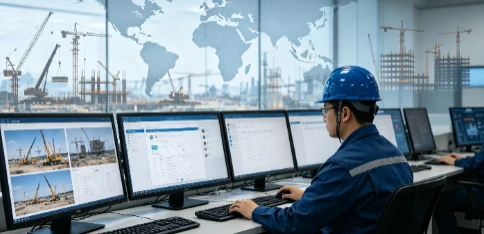
In smart construction sites in Wuhan, Anhui Fuyang, and other places, the tower crane driver's cab is now equipped with a 1.5-ton explosion-proof air conditioner, and the indoor temperature is precisely controlled at 26℃ ± 2℃. Some projects have also installed kitchen-level insulation boards or 3M explosion-proof insulation films on the exterior wall of the cab, reducing the visible light transmission rate to 20% and the ultraviolet radiation blocking rate to 99%. As a result, the indoor temperature can be reduced by 5 to 8℃. Moreover, for extreme high-temperature working areas such as steel structure roofs, project departments have set up continuous shading sheds and spray columns. Through micro-mist evaporation latent heat, the overall temperature of the high-altitude working area can be lowered by 3 to 5℃. More advanced projects have also piloted "remote intelligent centralized control tower cranes", allowing tower crane drivers to completely avoid high-altitude work and operate the 100-meter tower crane in a digital ground cockpit while enjoying air conditioning and watching multiple large screens, reducing the risk of falling from heights and heatstroke by over 80%.
Multidimensional noise reduction safeguards hearing and concentration.
In addition to high temperatures, the mechanical roaring during the operation of the crane and the external noises are also silent killers that trouble the drivers. Long-term exposure to high noise levels can lead to driver fatigue, headaches, and even hearing damage.
To create a quiet operating space, the new generation of tower crane driver's cabs have undergone comprehensive upgrades in terms of sound insulation design. The walls and ceilings extensively use composite sound-absorbing panels made of mineral wool layers, glass fiber layers, and perforated plates, which effectively absorb mechanical sound waves; the sealing strips for doors and windows are made of high-quality silicone material, forming an airtight barrier. Some high-end models even introduce an active noise cancellation system, using emitted reverse sound waves to achieve "noise reduction". The actual measurement data shows that after comprehensive acoustic renovations, the noise emitted from the cab is 25 dBA lower than that inside the machine room. The indoor noise is strictly controlled below 65 decibels at the driver's ear level, significantly improving the driver's concentration and operational accuracy.