

1: Only repair breakdowns, skip regular preventive maintenance

Many sites run hoists until breakdown occurs and ignore biweekly, quarterly maintenance cycles. Without regular lubrication and bolt inspection, invisible wear on racks, gears and mast bolts accumulates over time, leading to sudden derailment or falling hazards.
Correct standard: Follow a strict maintenance schedule-biweekly routine check, quarterly full inspection and annual overhaul. Fill special grease for rollers, drive gears and guide rails on time.
2: Only visually check safety devices without functional tests
Technicians merely look at limit switches and fall arresters instead of manual trigger tests. They skip mandatory 3-month load drop tests for anti-fall safety devices, or short-circuit broken limit switches to keep machines running. Once the cage loses braking protection, fatal falling accidents will happen.
Correct standard: Test all top/bottom limit, gate interlock and roof hatch switches manually every maintenance; perform rated load drop test every 3 months and send fall arrestors for official calibration every 2 years.
3: Tighten mast bolts by experience instead of torque wrench
Workers fasten connecting bolts by hand feeling without torque measurement. Loose bolts will gradually loosen under long-term vibration, causing mast verticality out of tolerance and collapse risk. Correct standard: Use torque wrench to fasten mast bolts with specified torque value; recheck all bolts after mast climbing or strong wind weather.
Industry Reminder
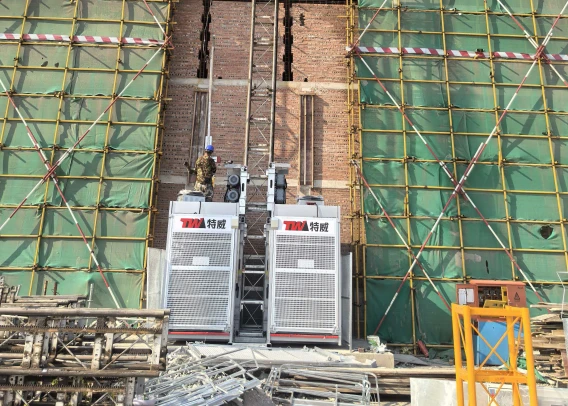
Routine maintenance is the core guarantee of hoist safe operation. Contractors shall cooperate with certified maintenance teams, eliminate wrong maintenance habits, and form closed-loop hidden danger management. Our factory provides full set professional maintenance training, original spare parts and after-sales technical support for global dealers and engineering customers.