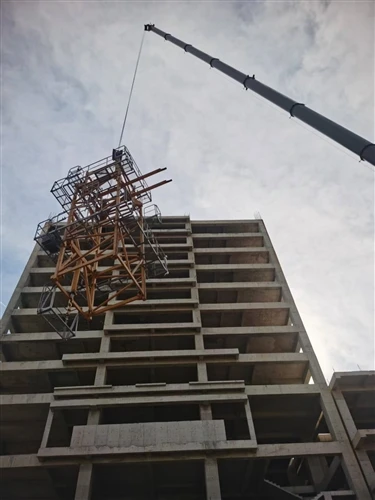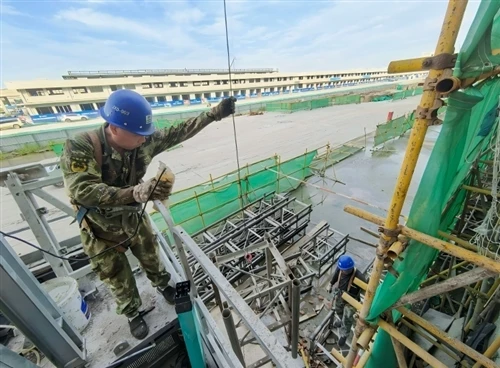


Tower cranes have formed four core application tracks in port scenarios, covering all types of port operations for offshore projects
Firstly, specialized handling of large wind turbine components. Currently, there is a strong demand for offshore operations in the wind power industry. The tower frames, blades, nacelles, and transformers of wind turbines are heavy and have extremely long dimensions. Ordinary port machinery is unable to complete cross-yard and cross-ship position transfers. The maximum operating radius of long-arm tower cranes can reach over 70 meters, and the lifting height can meet the requirements for stacking and loading multiple layers of large components onto ships. One piece of equipment can cover the entire berth yard, eliminating the need for frequent relocation, significantly reducing the waiting time for ships, and increasing the efficiency of wind turbine equipment loading and unloading by over 30% per ship.
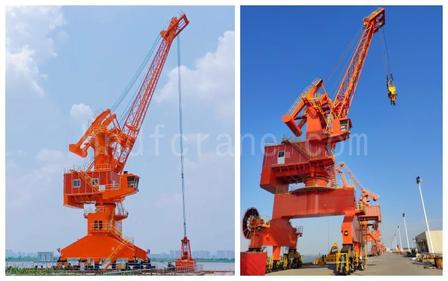

Secondly, the transfer of bulk cargo and industrial complete sets of equipment. Irregularly shaped scattered and miscellaneous goods such as steel coils, large machinery, container accessories, and engineering components can be flexibly transferred between the port, ship holds, and yard through the 360° full rotation function of the tower crane. They are suitable for small inland river cargo ships and near-sea general cargo ships with multiple berths for simultaneous operations, effectively filling the gap in heavy lifting equipment for small inland river ports.
The third is ship repair and outfitting projects. On the ship repair and construction docks, tower cranes are used for hoisting ship sections, assembling superstructures, and installing marine engines and pipeline equipment. The working range of these cranes is extensive, enabling them to carry out lifting operations simultaneously with the ship construction, thereby replacing multiple small mobile cranes and optimizing the construction layout of the shipyard.
The fourth is infrastructure construction in the port hinterland. During the construction phases of port expansion, warehouse buildings, wharf cofferdams, and waterway support projects, tower cranes also handle civil engineering construction and the loading and unloading of port materials. They can be used for both purposes, reducing equipment investment costs in the port area and shortening the construction period.